
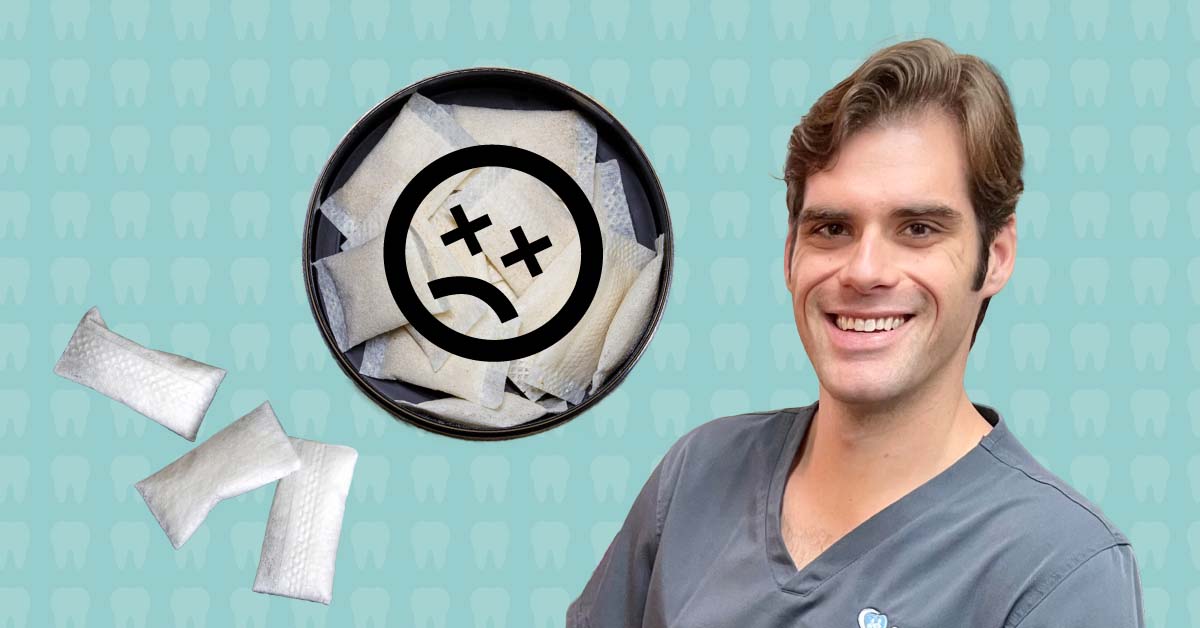
Big Tobacco has spent millions marketing nicotine pouches as a “safer” alternative to smoking, but “tobacco-free” doesn’t mean risk-free, and nicotine pouches have real consequences for your oral health.
We asked Dr. Blake Cohlmia, DDS, what nicotine pouches can do to your gums, teeth and overall oral health. His answers offer plenty to think about — especially if you use nicotine pouches regularly or keep putting them in the same spot.
Your Gums Are Paying the Price
Nicotine pouches are designed to sit between your lip and gum, but repeatedly putting a pouch in the same spot takes a toll on the tissue.
For Dr. Cohlmia, that’s one of the biggest oral health concerns.
“The main oral health concern is placement. Repeated placement in the same location for a long time can seriously harm gum tissue and teeth.”
That repeated exposure can cause chemical burns and inflammation.
“Pouches can cause chemical burns and inflammation. Inflammation can lead to gum recession and irritation, which can lead to a cancerous lesion.”
Nicotine can also make gum tissue more vulnerable by limiting blood flow.
“Nicotine limits blood flow to gum tissue, making it more susceptible to recession.” And once your gums recede, they don’t simply grow back. “Recession is permanent; gums do not naturally grow back. Severe sensitivity to liquids and air may require gum graft surgery, which is expensive.”
What starts as irritation in one small area can become a permanent problem.
Nicotine Doesn’t Just Affect Your Gums
The effects don’t stop where you put the pouch. According to Dr. Cohlmia, nicotine’s effect on blood flow can make it harder for your mouth to stay healthy and heal properly.
“Nicotine reduces blood flow to gums, making them more susceptible to infection and inadequate healing after certain dental procedures. This can lead to recession and exposed roots, which leads to sensitivity to cold water and air.
Nicotine can also affect your saliva. It causes dry mouth, reducing your saliva output. Saliva helps clean mouth from bacteria, and dry mouth leads to more plaque, cavities and bad breath.”
There’s another effect you might not expect: clenching and grinding.
“Nicotine is a powerful stimulant and may cause more clenching, grinding, broken teeth, jaw joint pain and jaw muscle pain.” Nicotine pouches might be small, but the impact on your mouth isn’t.
Your Dentist May See What You Don’t
You might not notice changes in your mouth right away, but your dentist will. Dr. Cohlmia says dentists can see signs of irritation and damage where a pouch is regularly placed.
“Chemical burn lesions can look like a ‘wavy potato chip’ where placed. They cause localized inflammation.”
He also says dentists can see gum damage after long-term use.
If you notice persistent irritation, changes in your gums, sores or unusual sensitivity, don’t ignore them. Tell your dentist what’s happening, including whether you use nicotine pouches.
Tobacco-free doesn’t mean risk-free.
If You Use Nicotine Pouches, Know What’s in Them
Dr. Cohlmia’s advice starts with understanding exactly what you’re putting in your mouth.
“Know exactly what is in pouches; read ingredients and check for sugars; learn the negative effects of nicotine on your mouth and brain.”
Don’t leave your dentist out of the conversation. Telling them you use nicotine pouches gives them important context when they’re examining your gums and other oral tissues and looking for changes over time.
Look Beyond the Label
A “tobacco-free” label doesn’t tell you everything you need to know.
Repeated pouch placement irritates your gums and can cause lesions, and nicotine is addictive and can contribute to gum recession, dry mouth, cavities, sensitivity and clenching or grinding.
There’s still more to learn about the long-term effects of nicotine pouches, but you don’t have to wait for every answer to take your oral health seriously.