
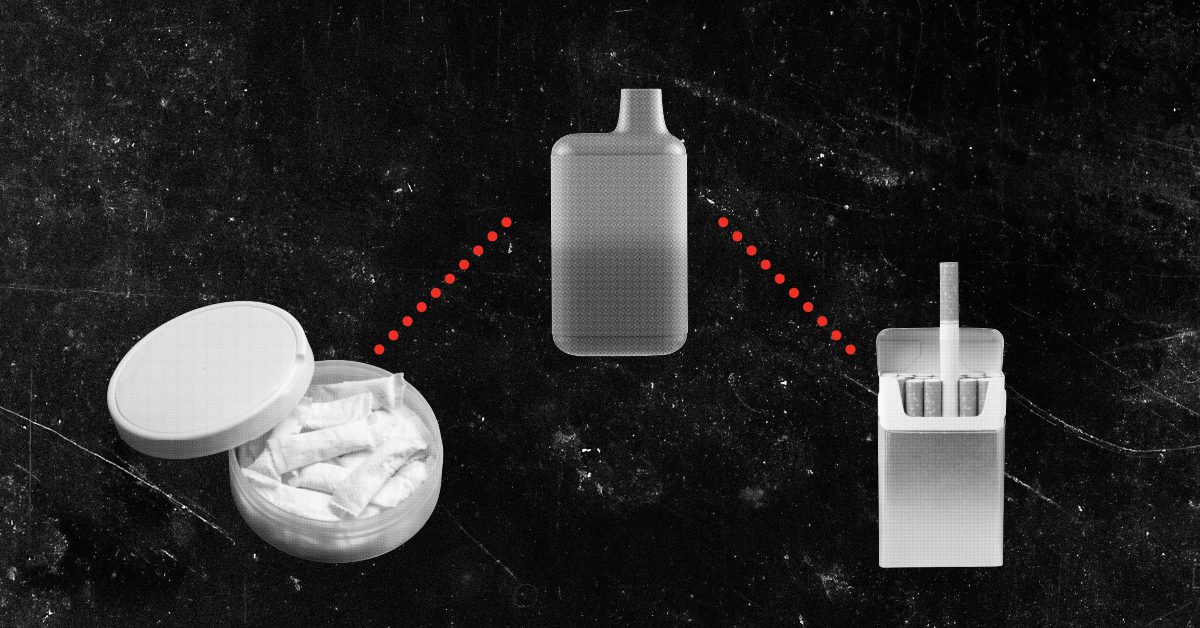
Walk into a convenience store and you will find dozens of nicotine products with different names, packages, flavors and ways to use them. Cigarettes sit beside vapes, nicotine pouches and other products that are designed to look completely different from the cigarettes people have been warned about for decades.
A small group of major tobacco companies owns brands across multiple categories, including cigarettes, vapes, nicotine pouches and chewing tobacco. That means when people move away from one type of nicotine product, these companies already have other products they can put in front of them.
The Same Companies Are Selling Across the Nicotine Market
Consider some of the biggest names in the tobacco industry:
- Altria owns a huge range of tobacco and nicotine brands in the U.S. Its cigarette brands include Marlboro, Basic, Benson & Hedges, Cambridge, Commander, Dave’s, English Ovals, L&M, Lark, Merit, Parliament, Players, Saratoga and Virginia Slims. It also owns smokeless tobacco brands including Copenhagen, Cope, Skoal, Skoal Bandits, Red Seal, Husky and Weyman’s Best. Through John Middleton, Altria owns Black & Mild, Carter Hall and Prince Albert. Its newer nicotine products include on! nicotine pouches and NJOY e-vapor products.
- Philip Morris International, or PMI, owns more than 130 cigarette brands around the world. Some of its major cigarette brands include Marlboro, Parliament, Virginia S, L&M, Lark, Merit, Muratti, Philip Morris, Bond Street, Chesterfield, Next and Red & White. PMI also owns newer nicotine products including IQOS, lil SOLID, lil HYBRID, VEEV and ZYN. PMI owns the Marlboro brand outside the U.S., while Altria owns Marlboro in the U.S.
- British American Tobacco, or BAT, owns or sells some of the biggest tobacco and nicotine brands in the U.S. Its cigarette brands include Newport, Camel and Natural American Spirit. It also owns Vuse vapes and Velo nicotine pouches, along with smokeless tobacco brands such as Grizzly, Kodiak and Camel Snus. Around the world, BAT also sells brands including Dunhill, Kent, Lucky Strike, Pall Mall and Rothmans, as well as glo heated tobacco products.
- Imperial Brands also sells products across several nicotine categories. Its cigarette and tobacco brands include Winston, Kool, Maverick, Backwoods, JPS, Gauloises, Davidoff, West, Rizla, L&B, Golden Virginia, Fortuna, Fine and P&S. Its newer products include blu vapes, Zone nicotine pouches, Pulze heated tobacco and other oral nicotine products. In the U.S., its ITG Brands business manages Winston, Kool, Maverick, Backwoods and Zone.
When People Quit, Big Tobacco Changes What It Sells
People have spent decades learning about the dangers of smoking, and millions have quit. Smoking rates have fallen as more people understand the risks and as tobacco control policies have made it harder for the industry to market and sell cigarettes the way it once did. Big Tobacco has responded by changing what it sells.
When one type of nicotine product loses customers, the industry has other products ready to take its place. The World Health Organization (WHO) describes this pattern as Big Tobacco continually reinventing and repackaging its products to sustain addiction and attract new users.
Big Tobacco Wants You To Believe the Next Product Is Safer
Big Tobacco has spent millions of dollars in marketing to make their products look appealing, modern and safer than the products that came before them. Flashy campaigns, sleek designs and carefully chosen words such as “next-generation,” “reduced-risk” and “smoke free” are specifically used to give people a false sense of safety.
This is not a new strategy. Tobacco companies have spent decades using marketing to make harmful products seem less dangerous. They promoted filtered, “light” and “mild” cigarettes as alternatives to traditional cigarettes, creating the impression that people could reduce the harm without quitting. Today, the industry is using many of the same tactics with a new generation of nicotine products.
The message may change, but the goal is the same: keep people addicted.
That is why “safer” deserves a closer look when it comes from an industry that profits from addiction. Big Tobacco has a financial reason to convince consumers that the next product is worth trying, especially when people are quitting the products that came before it.
Big Tobacco Keeps Finding New Ways To Sell Nicotine
Big Tobacco has spent decades learning how to keep its products in front of consumers. As people quit cigarettes and public awareness of tobacco’s dangers grows, the industry keeps adapting its products, its marketing and its message.
The names change. The technology changes. The products change. The companies selling them are often the same.
That’s why knowing who makes what matters. A new package does not erase a company’s history, and a new nicotine product does not mean the tobacco industry has stopped trying to sell addiction.
Big Tobacco has built a business around finding new ways to keep nicotine on the market. Knowing who is behind the product is one way to see past the marketing and understand what is really being sold.