
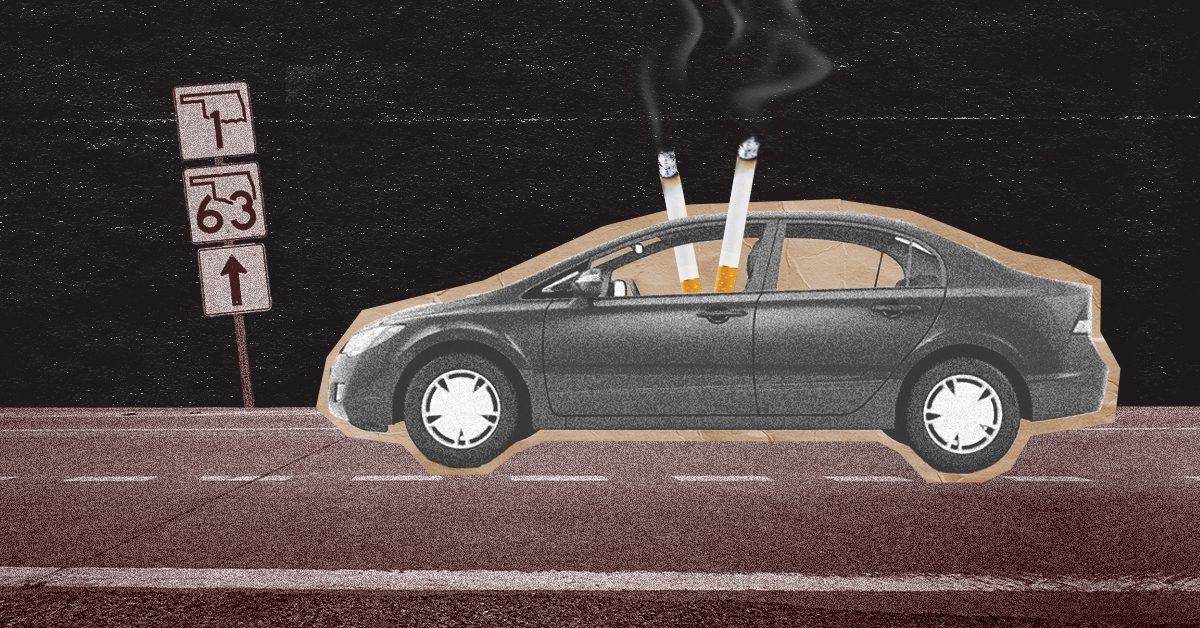
Can you smoke in your car in Oklahoma? Is it illegal? What are the repercussions? Does the law change if your car is parked? The answer depends on where you are, who’s with you and what kind of vehicle you’re driving. While state law doesn’t ban smoking in private vehicles, workplace policies, property rules and health risks all play a role.
Is It Illegal To Smoke in Your Car in Oklahoma?
Oklahoma doesn’t have a specific law that prohibits smoking in private vehicles. That means if you’re an adult driving your own car, smoking is legal. However, legal doesn’t always mean safe or consequence-free. Smoking in a vehicle puts your health and the health of your passengers in jeopardy, especially because it’s an enclosed space. It also creates instances of distracted driving. The Oklahoma Clean Indoor Air Act focuses on public spaces like restaurants, schools and government buildings. It doesn’t extend to personal cars.
When Workplace Policies and Vehicle Type Change the Rules
While Oklahoma doesn’t ban smoking in personal vehicles, certain situations create exceptions where smoking in a car is prohibited:
Company and Government Vehicles
If you drive a vehicle owned by your employer or a government agency, that organization’s tobacco-free policy likely applies. Many Oklahoma employers have adopted comprehensive smoke-free workplace policies that extend to company cars, trucks and fleet vehicles. Violating these policies can result in disciplinary action, even if you’re off company property or off the clock.
Rideshare, Taxi and Commercial Drivers
Drivers working for rideshare services, traditional taxi services or other passenger transport companies operate under company policies that typically prohibit smoking in vehicles. These rules protect passengers from secondhand smoke exposure and maintain vehicle condition. These rules usually apply to passengers as well, to protect the drivers’ health.
Parked Cars
Certain properties prohibit smoking in parked cars. This includes:
- School campuses and parking lots
- Hospital grounds
- Government facility parking areas
Private businesses also have the authority to prohibit smoking in personal parking lots. Even though you’re inside your own vehicle, the property owner’s rules apply when you’re on their land.
Can You Smoke in Your Car on Private Property?
If you’re sitting in your car in your own driveway or parked on your private property, Oklahoma law doesn’t stop you from smoking. That said, many health risks are associated with this decision. Smoking in your car affects more than just the moment you’re holding a cigarette. Residue builds up on upholstery, dashboards and windows. The secondhand and thirdhand smoke can impact every passenger, even those who aren’t present in the car with a lit cigarette.
Is It Safe To Smoke While Driving?
Oklahoma doesn’t have a law that specifically makes smoking while driving illegal, but that doesn’t mean it’s without risk. Smoking in such an enclosed space affects everyone in the car. Passengers are exposed to secondhand smoke, which can lead to serious health problems like asthma attacks or respiratory infections. Lighting a cigarette or reaching for a vape requires taking your eyes off the road and limits steering control. In the event of an accident, a lit cigarette also becomes a fire risk. If you drop it during a collision, it can ignite upholstery, clothing or spilled fluids. Vape batteries, while less common as a hazard, have been known to malfunction or overheat, creating additional risks in enclosed vehicle spaces.
Why Secondhand Smoke in Cars Is Especially Dangerous
Cars are small, enclosed spaces. When someone smokes inside a vehicle, secondhand smoke becomes highly concentrated, even with windows cracked or air conditioning running.
Smoking just one cigarette in a vehicle can produce secondhand smoke levels 10 times higher than the hazardous limits set by the Environmental Protection Agency.1 Even with windows rolled down, toxin and carbon monoxide levels remain dangerously high.
The Impact on Children
Oklahoma is also one of the few states where smoking in cars with children present is legal. Creating a smokefree car ordinance is especially important to keep children from being exposed to secondhand smoke, including smoking in cars with children, where exposure levels are significantly higher.
When kids are exposed to concentrated secondhand smoke, it increases their risk of:
- Respiratory illness and lung infections
- Ear infections
- Asthma attacks
- Bronchitis
- Cancer
- Sudden Infant Death Syndrome (SIDS) in babies
Several states and numerous cities and counties across the U.S. have already passed laws banning smoking in vehicles with children. An overwhelming majority of Oklahomans agree that smoking should not be allowed in vehicles when children are present. While Oklahoma hasn’t yet passed statewide legislation, public support for protecting children from secondhand smoke in cars continues to grow.
Making Your Car a Smokefree Space
Keeping your car smoke-free protects everyone who rides in it. Creating a smokefree car is a straightforward decision that benefits your health, your passengers and your vehicle’s value.
- Set a clear “policy.” If you own the car, you control the rules. Decide that your vehicle is smoke free and communicate that to anyone who rides with you. Most people will respect the boundary once it’s clearly established.
- Remove smoking-related items. If you used to smoke, or if you’re thinking about quitting, get rid of lighters, ashtrays and any other reminders that make it easy to smoke while driving. Out of sight often means out of mind. Reach out the Oklahoma Tobacco Helpline for FREE resources to help you quit, including patches, gum or lozenges.
Can you smoke in your car in Oklahoma? Legally, yes, in most situations, but understanding the law is only a part of the issue. Smoking while driving creates distractions that can lead to unsafe situations on the road. Smoking in an enclosed vehicle exposes passengers to concentrated secondhand smoke that causes real, measurable harm.
Your car is one space where you have complete control over air quality. Making it smoke free is a decision that protects everyone, particularly Oklahoma’s most vulnerable passengers: children.