
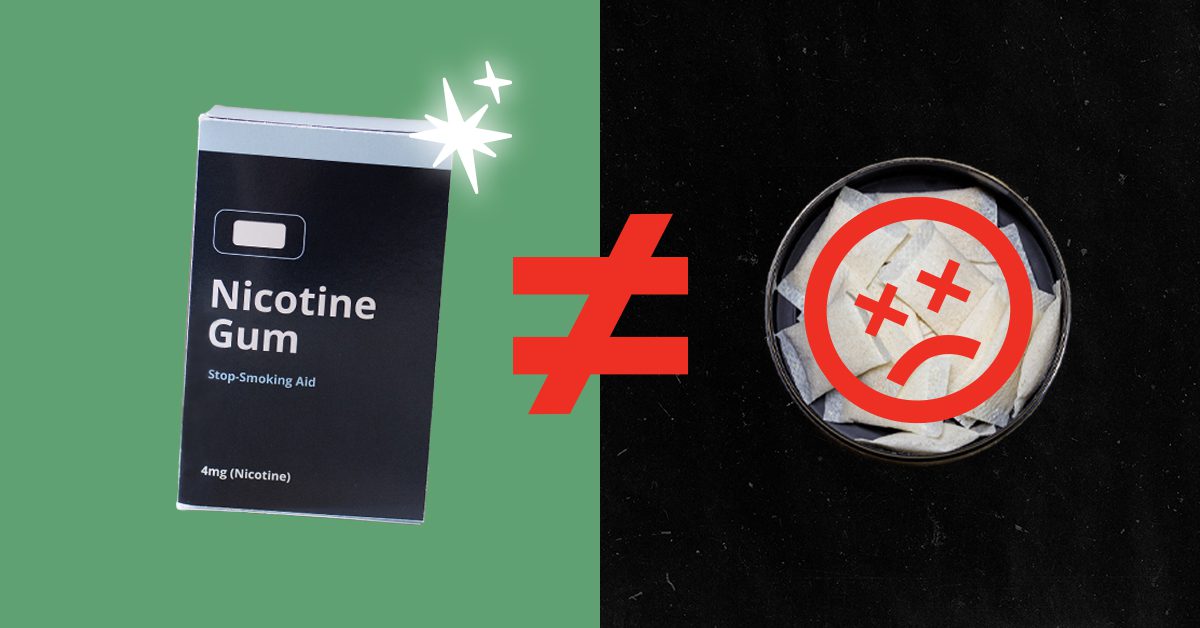
Big difference. Here are the facts when it comes to nicotine gum vs pouches:
What Is Nicotine Gum?
Nicotine gum is an FDA-approved nicotine replacement therapy designed specifically to help people quit tobacco and nicotine products.
Nicotine gum is designed as a step-down tool:
- Start at a dose that manages your cravings (2-4 mg)
- Use consistently on a schedule for the first several weeks
- Gradually reduce frequency over 8 to 12 weeks as dependence decreases
The evidence behind it is strong. According to the FDA, nicotine replacement therapies can more than double your chances of quitting successfully when combined with a behavioral support program, like the FREE offerings from the Oklahoma Tobacco Helpline. Nicotine gum is a clinically validated tool built around the goal to decrease dependency until it is no longer needed.
What Is Zyn?
Zyn is a nicotine pouch manufactured by Swedish Match, a subsidiary of Philip Morris International. The pouch sits between your lip and gum, where nicotine absorbs through oral tissue. There is no chewing, no smoke and no tobacco leaf. Philip Morris markets that last point heavily.
What the marketing leaves out: Zyn is NOT FDA-authorized as a quitting tool. It was never designed to help you quit nicotine. It comes in strengths up to 9 mg, with no built-in step-down structure and no clinical framework for reducing dependence over time.
According to the Truth Initiative, Philip Morris’s expansion of Zyn is a deliberate pivot toward smokeless products as cigarette sales decline. The company is not getting out of the nicotine business. It is finding new ways to stay in it. So, make no mistake — Zyn is a tobacco product dressed up to look like a healthy option.
Zyn Nicotine Pouches vs. Nicotine Gum
Nicotine gum and Zyn are not two versions of the same thing. One was built around a clinical framework for quitting. The other was built around a business model that relies on addiction. The differences are not subtle.
| Nicotine Gum | Zyn | |
| Purpose | Safely quit nicotine and avoid withdrawal | Replace cigarettes and addict new customers |
| FDA Approved for Cessation | Yes | No |
| Delivery | Chew-and-park method | Passive |
| Dosing | 2-4 mg | Up to 9 mg |
| Duration of Use | 8-12 weeks maximum | No endpoint distinguished |
| Manufacturer | Cessation providers | Philip Morris International |
The most important distinction: Switching nicotine products is not the same as quitting nicotine. Trading cigarettes or vapes for pouches with no clear guardrails means you are still dependent on the same addictive substance.
What Zyn Doesn’t Tell You
Zyn still contains nicotine, one of the most addictive substances known. A 2023 study found that while Zyn does not contain certain known cancer-causing agents found in conventional tobacco, it does contain trace chemicals like formaldehyde that the FDA has flagged as potentially harmful. The full long-term safety profile is still unknown, because these products have not been on the market long enough to study.
Zyn saw a 62% year-over-year increase in U.S. sales in 2023, with public health experts pointing to its addictive potential as a primary concern. This is largely due to Philip Morris’s deliberate marketing to reframe nicotine as a clean lifestyle product and target a younger generation. Their use of tactics varying from rewards programs to “Zynfluencers” is further proof that they are a recreational product, not a cessation one.
Are Nicotine Pouches Bad for Your Gums?
Short answer: yes.
Because nicotine pouches are relatively new, long-term research is limited. This is a commonly asked question, and the research that does exist is not reassuring.
- Long-term research is limited, but early findings are concerning. A 2024 review found oral mucosal changes at the pouch placement site, ranging from wrinkling to white lesions.
- Nicotine narrows blood vessels, reducing blood flow to gum tissue and limiting the body’s ability to heal.
- Repeated physical irritation from pouch placement leads to inflammation, soreness and, over time, permanent gum recession.
- Inflammation can improve after quitting, but gum recession cannot be reversed.
- Dry mouth is a common side effect of nicotine use. It reduces saliva production and increases bacteria buildup, compounding the damage.
Nicotine Replacement Therapy Can Help You Quit
The tools exist. The key is using them correctly.
Nicotine replacement therapy works best when it is paired with other support. A few things to note:
- The dosage matters. No matter which form of nicotine replacement therapy you prefer, working with a physician or Helpline Coach is important to the process.
- Triggers make a difference. When quitting, identifying what causes tobacco cravings will help you choose the most effective nicotine replacement therapy.
- Support helps. You don’t have to quit alone. A Coach and community is vital to success.
If you or someone you know is thinking about quitting tobacco, the Oklahoma Tobacco Helpline has FREE help available right now. Services include Coaches, online and text support, and a free supply of patches, gum or lozenges.
Teens can find support through My Life My Quit™, a FREE and confidential program built specifically for young people, ages 13-17.
When it comes to nicotine gum vs. Zyn, there’s not really a choice that needs to be made. One is for cessation with decades of clinical evidence, FDA approval and a built-in endpoint. The other has flavors, influencers and a tobacco giant counting on dependence. If quitting is the goal, the path forward is clear.
Sources
- Food and Drug Administration (FDA) – Want To Quit Smoking? FDA-Approved and FDA-Cleared Cessation Products Can Help
- Centers for Disease Control and Prevention (CDC) – How To Use Nicotine Gum
- National Library of Medicine – A Review of Smoking Cessation Interventions: Efficacy, Strategies for Implementation, and Future Directions
- Springer Nature Link — Harmful and potentially harmful constituents in two novel nicotine pouch products in comparison with regular smokeless tobacco products and pharmaceutical nicotine replacement therapy products
- Business Insider — Zyn confirms that business is booming in the U.S.
- National Library of Medicine — What is the impact of nicotine pouches on oral health: a systematic review